Something Borrowed
What to Do When the Forecast Says Rain
I've coordinated eleven outdoor weddings where the forecast flipped to rain in the final week, and here is the thing I now believe completely: the weather is rarely what ruins a wedding day. The couple's reaction to the weather is what ruins it, or doesn't. Here's what actually needs deciding when the forecast turns, in the order it needs deciding.
First: resist deciding anything five days out
Five-day forecasts for a specific hour, in a specific location, are genuinely unreliable — meteorologists will tell you this themselves. I've watched couples spiral over a forecast that flipped twice more before the actual day arrived. Unless your venue requires a final headcount or setup decision days in advance, the only thing worth doing at the five-day mark is mentally preparing for both outcomes, not choosing between them.
72 hours out: this is when the real decision gets made
By three days out, forecasts firm up considerably. This is the point where your planner or venue coordinator should be calling you, not the other way around, with a specific recommendation based on the actual radar trend, not just a percentage chance of rain. A 40% chance with scattered afternoon showers reads very differently from a 40% chance tied to a steady system moving through all day — ask your coordinator which one you're actually looking at.
What to check with your venue and vendors immediately
- Confirm the exact indoor or covered backup space, and how long it takes staff to physically convert it.
- Ask your photographer directly whether they have rain-specific shot plans — most experienced wedding photographers do, and some of the best photos from rainy weddings come from leaning into it rather than avoiding it.
- Check with your florist about whether any arrangements need adjusting for an indoor backup space versus the original outdoor plan.
- Confirm with your caterer whether the backup location changes the serving logistics or timing at all.
- Ask whoever is running your ceremony (officiant, coordinator, or venue staff) who makes the final rain-plan call, and by what time.
Taking care of your guests, practically
Guests remember discomfort far more than they remember rain itself. A few things make an outsized difference: covered or quick-access routes between parking and the ceremony space, a heads-up in advance (a short text or a line on your wedding website) so people dress and plan accordingly, and simply having a dry, warm indoor space available even if the ceremony itself stays outdoors under a tent. None of this requires elaborate planning — it requires someone thinking about it a day ahead instead of in the moment.
A story from one of those eleven weddings
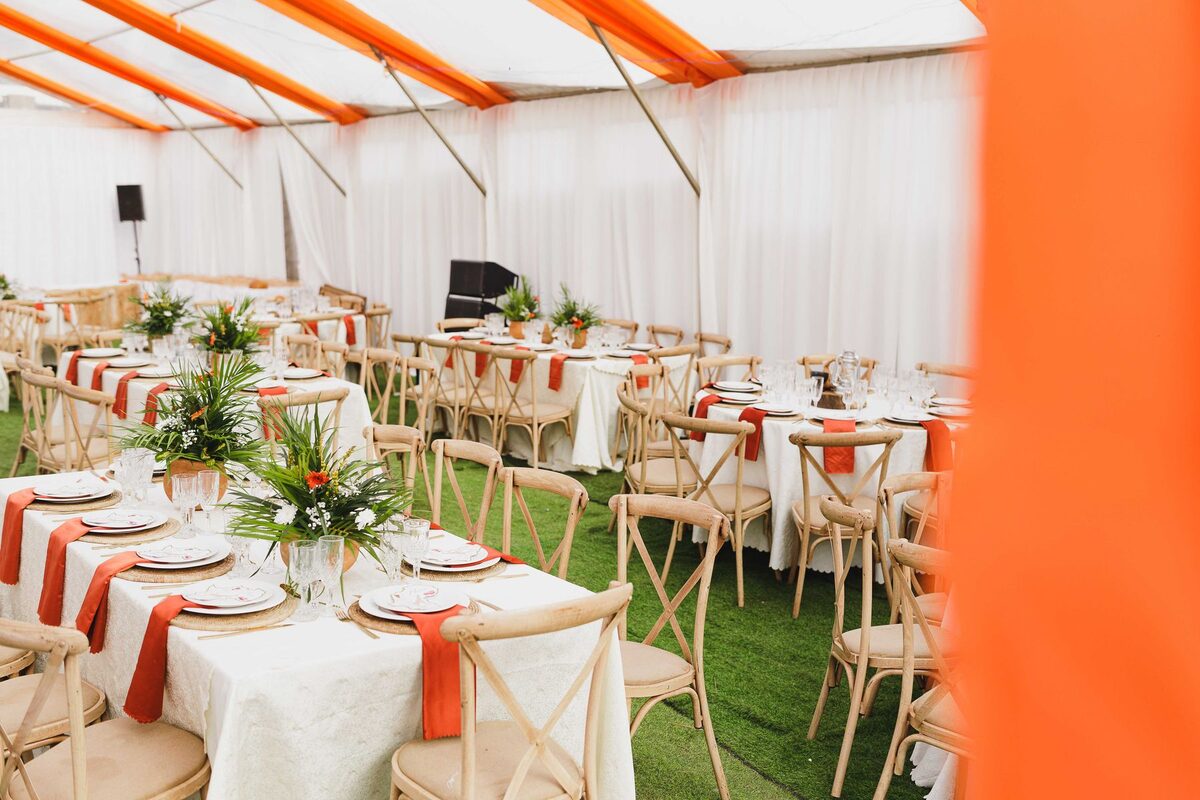
The clearest example I can offer is a wedding from a few years back, an outdoor ceremony on a bluff that had been the entire reason the couple chose their venue in the first place. The forecast turned two days out, and by the morning of, it was a genuine downpour, not a passing shower. We moved the ceremony into the venue's reception barn with about ninety minutes' notice, which meant restringing lights, flipping the room from a dinner layout to a ceremony layout, and flipping it back again before dinner service — a lot of fast, slightly chaotic work from the vendor team that the guests never saw happen.
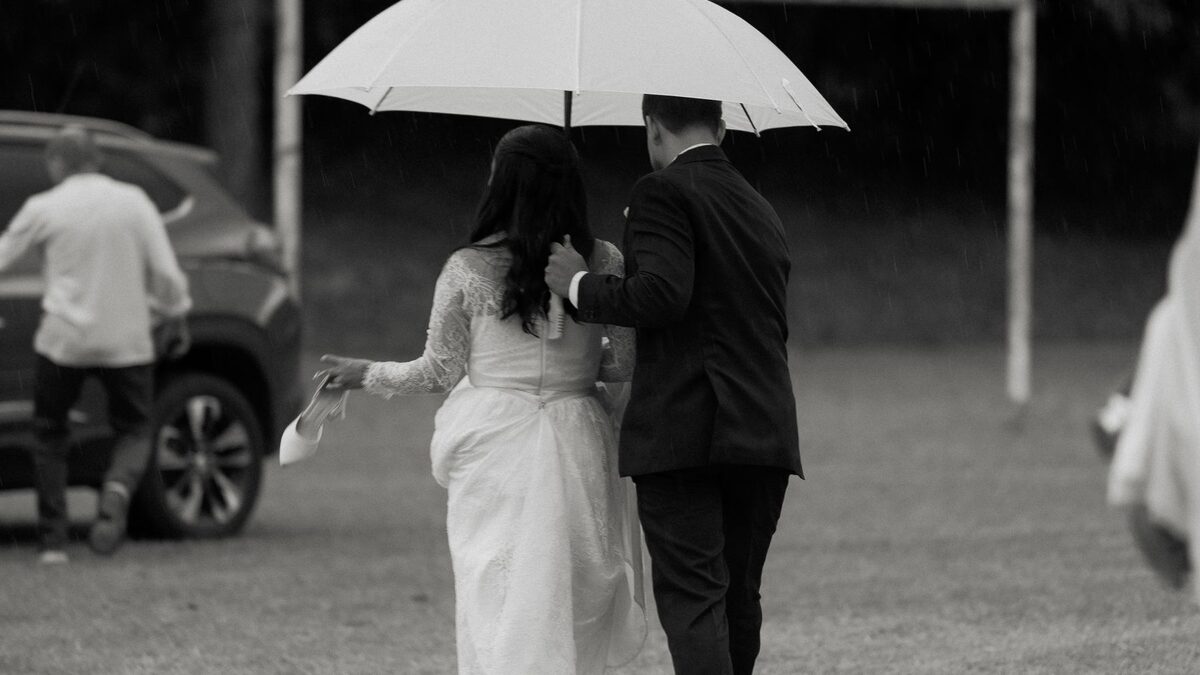
What the couple remembers, a few years later, isn't the scramble. It's that their officiant opened with a joke about the weather that got a genuine laugh from a room of a hundred wet, slightly cold guests, and that the photographer got a shot of them laughing together under one shared jacket on the walk between buildings that is, by the couple's own account, their favorite photo from the entire day. None of that was in anyone's plan. It became the story because they let it, rather than spending the day negotiating with the sky.
The timeline adjustments nobody mentions
Rain plans almost always compress your timeline slightly, because converting a space takes real time, and vendors need to physically move equipment and decor. Build in a 15 to 20 minute buffer specifically around your ceremony start time if a last-minute venue conversion is even a possibility, and let your wedding party and immediate family know verbally that this buffer exists, so a short delay doesn't read as something going wrong.
What I tell every couple, and genuinely mean
The weddings I've coordinated that ended up rained on are, almost without exception, remembered fondly by the couple a year later — often more vividly than the ones with picture-perfect weather, because something about the shared minor crisis of ducking under a tent together becomes its own story. The couples who struggled weren't the ones who got rain. They were the ones who spent their actual wedding day angry at the sky instead of at the reception.
A short list of what's actually worth letting go of
- The specific outdoor backdrop you'd pictured for photos — your photographer has other ideas, and most of them are good ones.
- A completely dry guest experience — covered and comfortable is the realistic goal, not bone dry.
- Having zero timeline adjustments — build in the buffer and stop expecting a perfectly smooth transition.
What's worth protecting, instead: your own mood, the first twenty minutes after the ceremony, and whatever ten minutes you can carve out, just the two of you, before the reception swallows the rest of the night. Rain doesn't take any of that away unless you let it.