Something Borrowed
A Short History of the White Dress
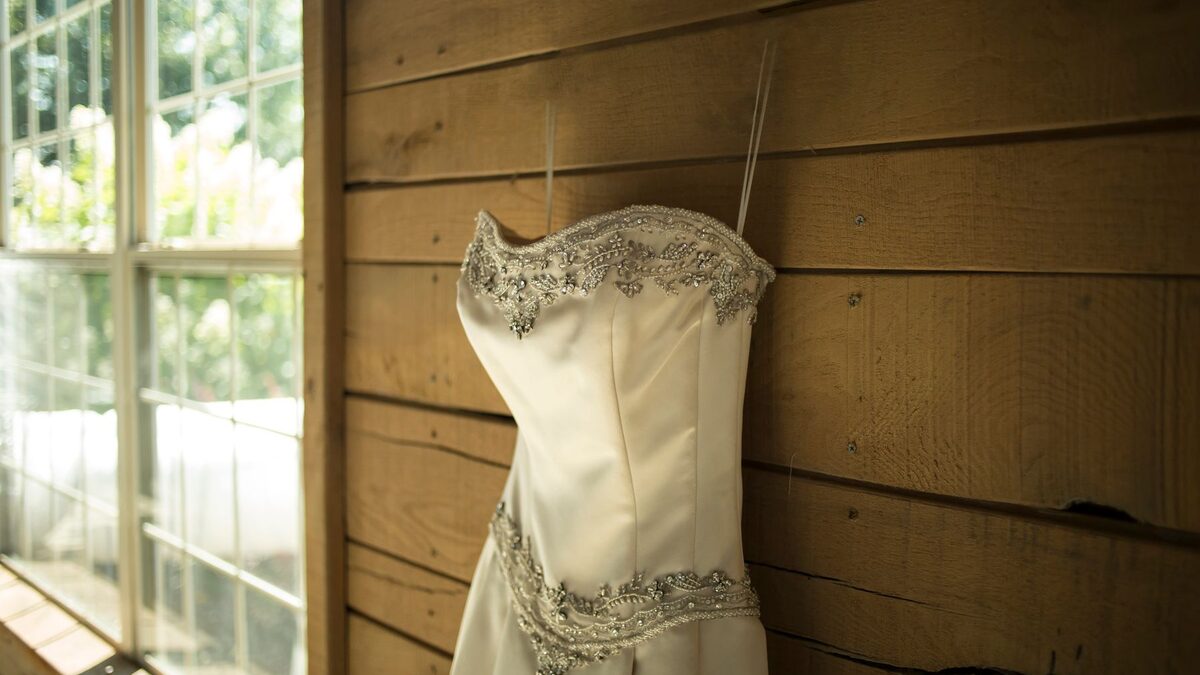
If you've ever assumed brides have always worn white, you're off by most of recorded history. For centuries before white became the default, a bride's wedding dress was simply her best dress — whatever color that happened to be — and the idea that it needed to be white, worn once, and never repeated is barely two hundred years old.
What brides actually wore before white
In medieval and early modern Europe, wealth and status dictated a bride's wedding attire far more than any symbolic color rule. Brides wore their richest available fabric and color, which, depending on the era and region, frequently meant red, a color associated with luck, fertility, and celebration across much of Europe and Asia alike. Blue was also common, tied to associations with purity and fidelity that would later get transferred, somewhat confusingly, onto white. Practical brides from working families simply wore their best existing dress, white or not, because owning a garment meant to be worn exactly once was a luxury almost nobody but royalty could justify.
The wedding that changed everything: 1840
The turning point has a precise date: February 10, 1840, when Queen Victoria married Prince Albert wearing a gown of white satin trimmed in orange blossoms, breaking from the heavier, richly colored royal wedding attire of her predecessors. Victoria's choice wasn't random — she wanted to showcase British-made Spitalfields silk lace, and white was the color that displayed the lace's craftsmanship most clearly, along with a practical desire to avoid the heavy formal court dress typically expected of a royal bride.
What Victoria couldn't have fully anticipated was the speed and scale at which her choice spread. Newspaper illustrations and the new, rapidly growing fashion press carried detailed descriptions of the gown across Britain, Europe, and eventually the United States. Within a decade, white had shifted from "a queen's personal choice" to "the fashionable choice for any bride who could afford it" among the upper and growing middle classes.
White as a status symbol, not (yet) a purity symbol
It's a common misconception that white has always symbolized virginity or purity in a moral sense. For most of the nineteenth century, the dominant meaning was closer to the opposite of practicality: white was expensive to keep clean, impossible to wear more than once without significant upkeep, and therefore a visible display that a family could afford both the dress and the extravagance of wearing it exactly one day. The purity association was layered on more deliberately later, largely through the Victorian era's broader obsession with feminine virtue, and solidified further in early twentieth-century etiquette writing that explicitly tied the color to premarital chastity.
How the tradition spread and changed, decade by decade
- 1840s–1860s: White spreads among the upper classes in Britain and Western Europe, closely following Victoria's example.
- 1870s–1900s: Ready-made patterns and department store dressmaking make white gowns achievable for the growing middle class, though many working-class brides still married in their best colored dress well into this period.
- 1920s–1930s: Hemlines shorten dramatically along with every other fashion category, but the white color convention holds firm even as silhouettes shift with the decade's flapper styles.
- 1940s: Wartime fabric rationing in Britain, the U.S., and much of Europe forces many brides back toward practical colored dresses or borrowed gowns, a brief and circumstantial reversal of the trend.
- 1950s–1960s: Post-war prosperity and the rise of mass bridal manufacturing cement white as the default expectation across nearly all income levels in the West.
- 1980s: Princess Diana's 1981 gown, with its dramatic silhouette and 25-foot train, triggers a wave of maximalist white wedding dresses that defines the decade's bridal fashion.
Cultures where white was never the tradition
It's worth noting that "brides wear white" was never a universal default outside the European tradition that eventually spread through Western colonial and cultural influence. In much of China and across many East and South Asian cultures, red has remained the traditional, auspicious wedding color for centuries, explicitly tied to luck and prosperity rather than anything white was ever meant to symbolize. In parts of India, red, gold, and richly saturated colors remain standard for bridal attire, with white historically associated with mourning in several regional traditions rather than celebration. Even within predominantly white-tradition Western countries, these distinctions are increasingly visible as multicultural weddings blend both color traditions deliberately.
What survived from the Victorian ritual besides the color
The color is the part most people know, but Victoria's wedding set several other conventions in motion at the same time. Her choice of orange blossoms, a symbol of fertility and purity that had circulated in European folklore for generations, became a standard bridal accessory for decades afterward, appearing in everything from wreaths to bouquets well into the early twentieth century. The published illustrations of her gown also helped standardize the idea of a dedicated, elaborate bridal veil as a central part of the look, rather than the simpler head coverings more common before her wedding. In a sense, 1840 didn't just popularize a color — it created the first widely distributed template for what an entire bridal look was supposed to include.
Where the tradition stands now
Modern bridal fashion has loosened considerably from the strict white-only convention of the mid-twentieth century. Colored wedding gowns, patterned fabrics, and non-traditional silhouettes have become increasingly visible on runways and real weddings alike over the past decade, suggesting the two-century-old rule is, at minimum, no longer treated as an obligation. What's interesting is that even as the rule loosens, most brides who choose white today describe it not as tradition for tradition's sake, but as a color they simply find beautiful — which, in a strange way, brings the whole two-hundred-year story back around to where it started: a bride choosing the dress that felt right to her, color included.